Lithium vs Tubular Battery for Solar: Which Should You Choose?
Quick answer: Lithium (LiFePO4) batteries cost more upfront but give more usable capacity, last many more cycles, charge faster and need no maintenance. Tubular batteries cost less to buy but need water top-ups and ventilation, give less usable energy and wear out sooner. For a hybrid system that cycles every day, lithium usually costs less over its life. For occasional backup on a tight budget, tubular can still make sense.
Lithium vs Tubular Battery at a Glance
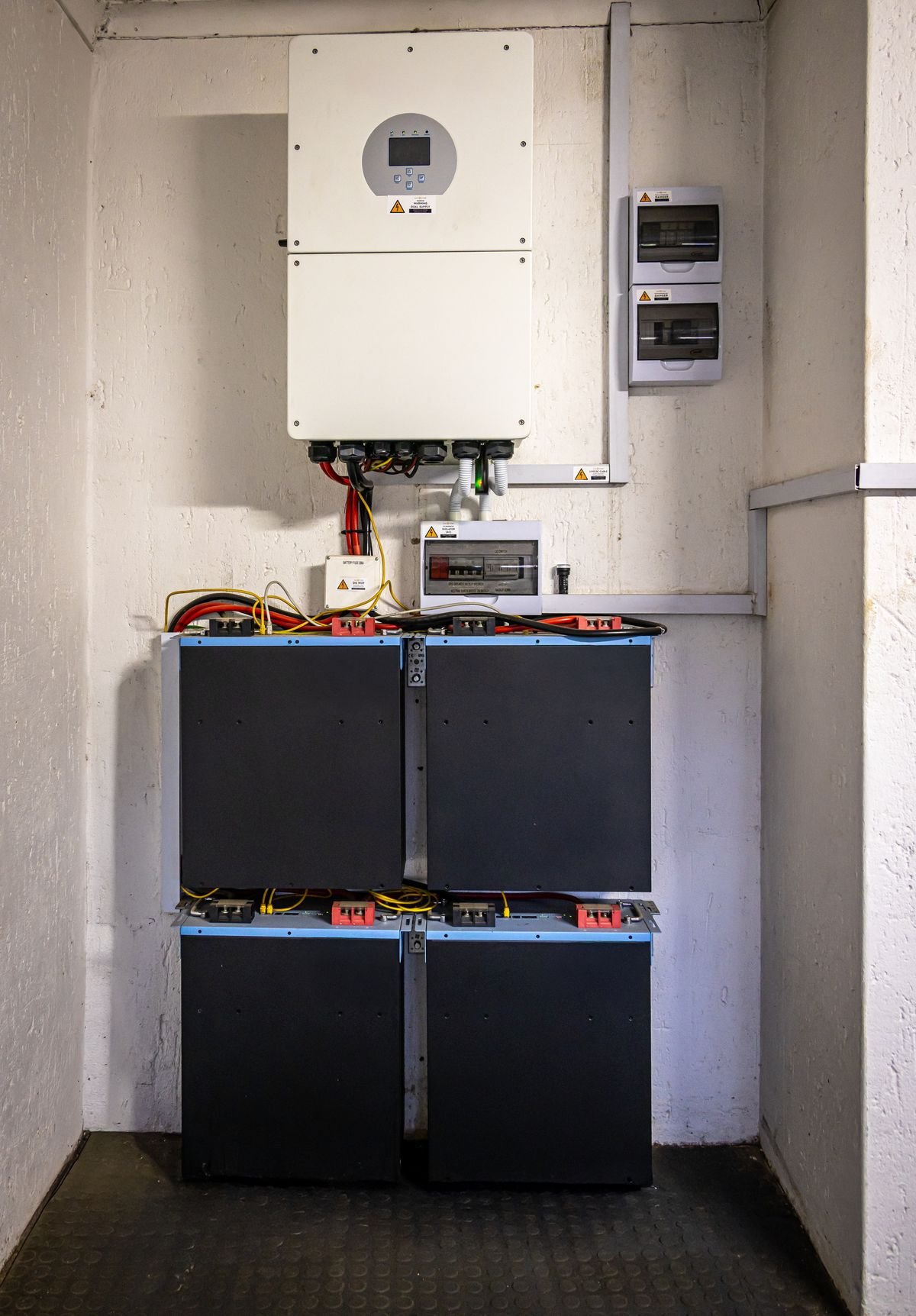
| Feature | Lithium (LiFePO4) | Tubular (lead-acid) |
|---|---|---|
| Usable capacity | Most of rated capacity | About half, if you want it to last |
| Cycle life | Often rated for several thousand cycles | Far fewer |
| Charging | Fast | Needs a long, full charge to stay healthy |
| Maintenance | None | Distilled-water top-ups, clean terminals |
| Ventilation | Normal airflow | Releases gas while charging, needs good ventilation |
| Weight and space | Compact, light | Heavy, more floor space |
| Upfront cost | Higher | Lower |
| Cost over its life (daily use) | Usually lower | Often higher, replaced sooner |
The Two Battery Types Explained
Tubular battery
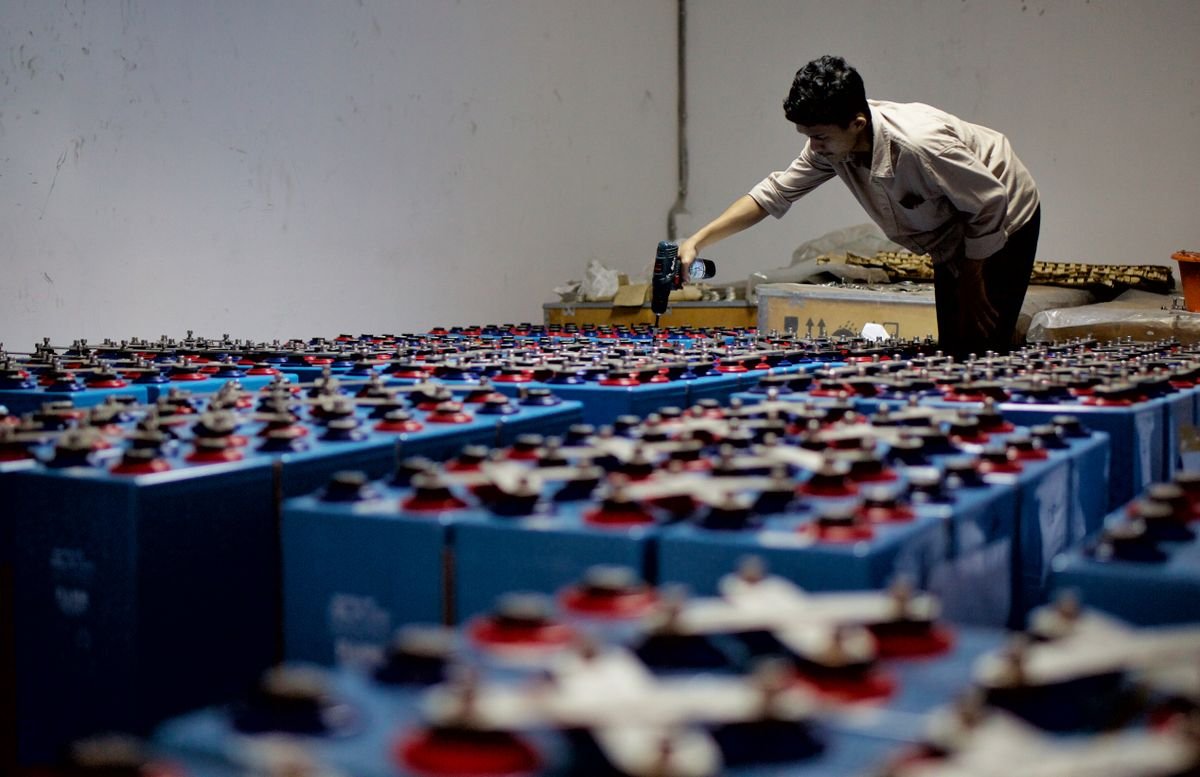
A lead-acid battery with its positive plates made as tubes, which handles repeated deep discharge better than ordinary flat-plate batteries. Long used with UPS systems in Pakistan, and still a common low-cost option for solar backup. A typical 48 V solar bank uses four 12 V batteries in series.
Hybrid solar system in Karachi →Lithium (LiFePO4) battery
Lithium iron phosphate is the lithium chemistry most used for home and business solar storage. It is more thermally stable than many other lithium types, and each pack includes a battery management system (BMS) that protects the cells. Solar lithium packs are usually 48 V or 51.2 V and can often be stacked to add capacity.
Commercial solar installation in Karachi →Usable Capacity: Why Rated kWh Is Misleading
The number printed on a battery is its rated capacity, not what you can safely use every day.
- A 5 kWh lithium battery can typically deliver around 4 to 4.5 kWh per cycle, depending on the manufacturer’s recommended depth of discharge.
- Four 12 V, 200 Ah tubular batteries have a rated capacity of 9.6 kWh (4 × 12 V × 200 Ah). To keep them healthy, you would normally use about half, or roughly 4.8 kWh.
So a tubular bank needs roughly twice the rated capacity to match a lithium battery’s usable energy, which adds weight, space and cost.
Battery Life: Cycles, Depth of Discharge and Heat
Battery life is measured in cycles: one full discharge and recharge. A hybrid system in an area with daily load shedding or evening use may cycle its battery every day, so cycle life matters a lot.
Three things shorten any battery’s life:
Deep discharge
regularly draining a battery further than recommended
Solar with battery backup →Heat
high temperatures speed up ageing for both types, and Karachi summers are hard on batteries in hot rooms or direct sun
Solar panels in Karachi weather →Poor charging
tubular batteries left partly charged for long periods lose capacity, a problem called sulphation
Solar panel installation in Karachi →Place any battery bank in a shaded, ventilated spot, away from direct sun and heat sources. Weather guide →
Cost Over the Battery’s Life
Compare batteries by the cost of each unit of energy they deliver over their life, not just the purchase price:
Lifetime cost per unit ≈ battery price ÷ (usable kWh per cycle × expected cycles)
Because lithium delivers more usable energy per cycle and many more cycles, its lifetime cost per unit is usually lower when the battery is used every day, even though the upfront price is higher.
Which Battery Is Best for a Solar System in Karachi?
Choose lithium
if your battery will cycle daily, you want evening self-consumption under net billing, space is tight, or you don’t want maintenance.
Hybrid inverter & battery setup →Choose tubular
if your budget is tight, backup is only needed occasionally, and you have a ventilated space and someone to handle top-ups.
Solar vs UPS vs generator →Upgrading from a UPS
if you already own healthy tubular batteries, a compatible hybrid inverter may be able to use them for now, and you can move to lithium when they wear out.
How to choose a solar company →Compatibility: Battery and Inverter Must Match
Not every lithium battery works with every hybrid inverter. Check that the battery’s voltage matches the inverter, and that the inverter supports the battery’s communication protocol, so the BMS and inverter can share charge information. Mismatched systems can charge poorly or shut down unexpectedly.
Signs Your Solar Battery Is Failing
- Backup time is much shorter than when the battery was new
- The battery never reaches full charge
- The inverter shows battery alarms or faults
- A tubular battery needs frequent top-ups, feels unusually hot or looks swollen
- A lithium battery’s BMS keeps cutting out under normal loads
If you notice these, have the battery tested before replacing it. Sometimes the cause is an inverter setting or wiring fault rather than the battery. Solar repair →
Buying Tips
- Ask for the datasheet with rated cycles, recommended depth of discharge and operating temperature
- Get the warranty in writing, including what counts as a failure
- Buy from a supplier who can support the battery locally
- Be wary of unusually cheap lithium packs, which may use lower-grade or reused cells
Frequently Asked Questions
Which battery is best for a solar system?
For daily cycling in a hybrid system, a LiFePO4 lithium battery is usually the better choice because of its usable capacity, long cycle life and low maintenance. Tubular batteries suit tighter budgets and occasional backup.
How long do lithium solar batteries last?
It depends on the number of cycles, depth of discharge and temperature. Many LiFePO4 batteries are rated for several thousand cycles. Check the datasheet and warranty for the model you are buying.
Is a lithium battery worth the extra cost in Pakistan?
If the battery will be used most days, usually yes, because its lifetime cost per unit is lower. If you rarely use backup, tubular may be enough.
Can I use my old UPS batteries with solar?
Sometimes. If they are healthy and the hybrid inverter supports lead-acid batteries, they can be used until they need replacing.
Can I mix lithium and tubular batteries?
No. Different chemistries charge differently and should not be connected in the same battery bank.
Related Solar Services in Karachi
Get a Free Solar Site Survey in Karachi
Send your K-Electric bill on WhatsApp or call 0311-7443116. We reply with the right system size and an itemised quote.